A tale of two tarts.

Here is a tale of two tarts. The savoury one is a cheats’ tart, and the sweet one is a tarts’ tart. Tart no.1, the savoury one,  is perfect ‘girly’ food, the ideal answer for a light lunch, tart no.2 is for tart bores, it is a bit of a labour of love but oh so satisfying once made! So tart no. 2 requires patience and time, tart no. 1 is instant gratification. Take your pick.

I quite like tarts – I used to make a lot but now as mother to the little people I spend most of my time perfecting my dinosaur roar as opposed to perfecting my pastry! Liberated (as in not working) and spoilt as I am, chasing little people around the house, garden and countryside, something has to give and sadly that is homemade pastry – at least some of the time. You see I have discovered a rather genius substitute – all butter puff pastry. Something in the label gives it away – lets call it the butter! It really is rather good and hence why this tart is such a cracker when juggling with dinosaurs and cooking for the stream of gorgeous people who traipse through our kitchen.

Tart no 1 is ‘courgette, gorgonzola and thyme’, but that’s because we have a glut of courgettes and ends of gorgonzola, the week previously it was ‘butternut and goats cheese’, the week before ‘slow roasted tomato and ricotta’ – the filling is really whatever you have to hand – the point being one should not be tied to the filling ingredients, what you do need to have is ‘all butter puff pastry’, cream and eggs, and baking beans – not that you are going to eat those. Now for Tart no 2 – the labour of love,  you will have to love baking and probably have to have a heap of people to feed to justify making this one. It is a proper Autumn tart, a sweet pastry base baked blind filled with almond frangipani and meltingly sweet figs. Served with a little  clotted cream, creme fraiche or nutmeg mascarpone it is rich, indulgent and as sweet as sweet, just as puddings should be.
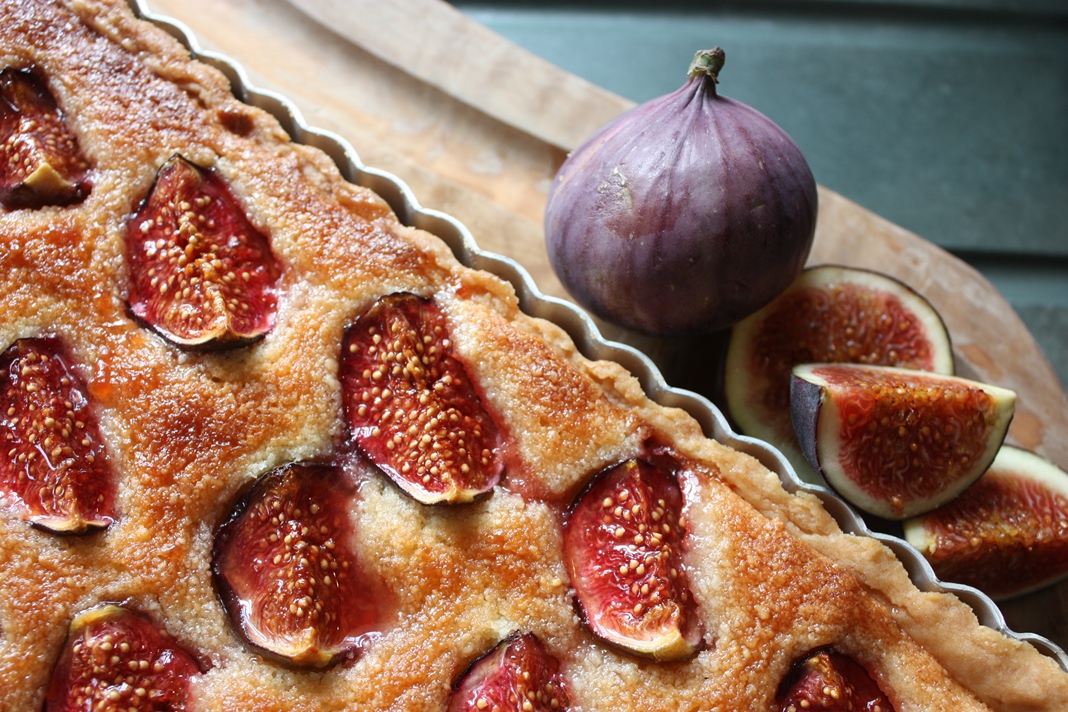
There is an old wives tale in the kitchen that you either have pastry hands or bread hands! I don’t know if I really believe this but I do know pastry is temperamental, sometimes it works like a dream, sometimes it’s a horror. This sweet pastry recipe is from Skye Gyngell and I find it works extremely well. I made up half of what she recommends which more than amply fills a tart to serve 8 people with left overs to make biscuits for the little people. The lesson with pastry is to be patient with it, after all it needs a fair bit of resting (don’t we all) – so don’t embark on this if you are in a rush! After the pastry is made it needs to rest, after it has been rolled and lined the required tin, it needs to rest, it then needs to be baked blind – I told you it’s a faff, and this is before you even embark on making the frangipani!

I don’t know why I got obsessed by making a fig tart – maybe it’s just a need and desire to cook, or maybe I’m turning into my grandmother who had a wonderful sweet tooth to the exclusion of practically all other food. The fact of the matter is the fig tart was fantasized about, then a fair amount of recipe cross referencing took place trying to find the filling that appealed the most. I settled on one of Jamie Oliver’s, from his Italian cookbook, which strangely I rarely use, but it sounded good and importantly relatively simple. Again I cut the recipe in half which ended up being the perfect quantity for a narrow long tart tin. It was delicious, a really good pudding for an Autumn evening.

Tart Recipes

Puff Pastry Tartlets

1 packet of ‘all butter’ puff pastry

1 egg yolk and 1 egg

Double cream

Salt and Pepper

The quantity above is for 2 tartlets – this will obviously leave you plenty of pastry left over for sausage rolls, more tarts, or just for popping in the freezer for another day.

1. Roll out the puff pastry to line your tart tins, not too thin , probably about 3 mm thick and leave a little extra over the sides. Puff pastry as the name suggests, puffs up in baking and hence shrinks, so do allow extra around the sides.

2. Having lined your tins, then pop a piece of baking parchment in the tins covering the pastry and now fill it with baking beans. The baking beans are key as they will keep the middle part of the tart from puffing up while blind baking the pastry.

3. Pop in the oven and bake at 180 for 15- 20 minutes till the sides have turned a golden brown and puffed up, now remove the baking parchment and pop the tarts back in the oven for another 5-10 minutes to dry out the middle, it will puff up a bit but don’t worry the filling with push it back down again!

4. Now for the filling, I like a good creamy, rich tart with lots of seasoning, my rule of thumb for 2 individual tartlets (as above) is 1 egg yolk, 1 egg, whisked together, followed by the equivalent quantity of double cream, a really good pinch of maldon sea salt, grind of black pepper and good grating of fresh parmesan. Herbs are always a great addition, thyme works well in most tarts as do chives. Left over ends of cheese also work, any kind of blue cheese, goats cheese, really any cheese at all! As for the actual filling, left over vegetables are always a winner, brocolli, butternut, tomatoes, roasted onions, courgettes, spinach, etc, the list is endless, I have previously added in left over bacon from breakfast, parma ham, smoked fish – but not all at once! The point being these tarts should be delicious but also serve the purpose of ‘dejunking’ the fridge.

5. Pop your chosen filling in the tart and pour over the cream and egg mix. Put your tart tins on a baking tray as it makes it easier to manoeuver them, and then put them in the oven at 180c for 15 – 20 minutes till the filling has puffed up, the egg and cream mix has risen and turned golden. Serve hot, warm or cold with a fresh green salad.

Suggested fillings that work well:

Roasted butternut, blue cheese and thyme

Courgette, goats cheese, chive, thyme, crispy bacon

Slow roast tomato, ricotta and thyme

Fig Tart – my labour of love!

Pastry

250g plain flour, plus more for dusting

125g butter, chilled, cut into cubes

1 whole organic, free-range egg yolk

1 tsp sugar
A few drops of vanilla extract

1. Put the flour, sugar and butter into a food processor/ magimix / kenwood with a k- beater, and pulse until fine crumbs form.

2. Add the egg yolk and the vanilla essence, pulse a few more times and the mix should come together – if it is still a little dry add a few drops of very cold water and bring it together by hand. It should be softish and pliable.

3. Remove the pastry and make it into a ball – wrap with cling film and place in the fridge for 20 minutes to allow it to rest!

4. Now dust some flour on a work surface and roll out the pastry, try not to overwork it – roll it just enough to get the right thickness and then line your tin, I recommend 2-3mm in thickness. Now, back in the fridge for another 20 minutes of resting. Now turn your oven on at 180c. The tart tin I use is a rectangular one, measuring 10cm by 30cm.

5. Remove the tart case from the fridge, line with baking paper and fill with baking beans and bake in the oven for 20- 30 minutes till the pastry has just turned color and is looking cooked. At around 15 to 20 minutes remove the baking beans and let the bottom of the tart dry out and cook a little more. Now remove from the oven – have a drink as stage 1 is over!! But get cracking on the frangipane.

Frangipane

140g of ground almonds

25g of plain flour

125g of butter

125g of caster sugar

1 egg

1 tablespoon of sweet wine

8 figs

1. Blitz the butter and sugar together in a magimix till light and creamy, add in the almonds, egg, flour and sweet wine. Now place this mix in the fridge for 20 minutes to firm up.

2. Remove from the fridge, and press evenly into the baked pastry case. Now take your quartered figs and press them evenly into the tart.

3. Finally, bake in the oven for 40 minutes, or until the frangipane has become firm and golden. Serve with clotted cream, creme fraiche or nutmeg mascarpone. If you have the energy glaze the tart with some syrup, a little simmered down jam and water, and start feasting.

Notes:

Tart tin 10cm – 30cm

Baking Beans – I use the standard ceramic beans for blind baking that can be bought in any cookshop.

Posted in Delectable delights, Picnic party | Tagged , , , , | 1 Comment

White magic!

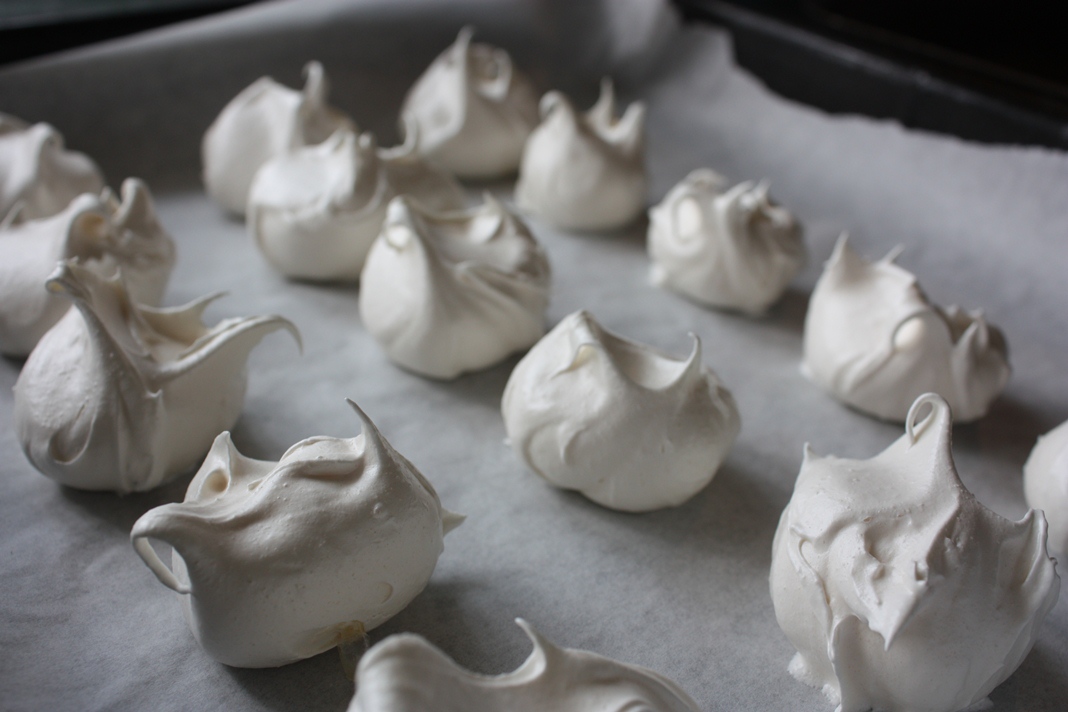
Please excuse this absurdly short and sweet little rant on meringues. I have two other far more pressing topics to share, a cheeky weekend in Bordeaux and my fathers very important 70th birthday party, but somehow this has taken precedence, and these magic little white swans won the blog bid this week!

Does anyone else ever seem to collect egg whites? I mean not deliberately, but in a vain attempt not to throw food away, I always have, and probably always will save the whites from eggs, convinced that they will find a home at some stage. Egg yolks always seem to be in higher demand than their neighbouring whites, and hence lingering at the back of our fridge there is always a somewhat forgotten pot of whites! This throws me into a dilemma as the only really sensible use for them is meringues, and strangely I am not mad about them, I put that down to over indulgence as a child. Needless to say the ‘little people’ don’t share my ambivalence, they adore them, so just every now and again a batch gets made.

I find making meringues incredibly therapeutic, I may not eat them but I do love making them. You start off with a strange  and slimy, gelatinous body (the egg white), and through a combination of beating air in vigorously and the addition of white sugar, end up with a fabulous, glossy, brilliant white mass, that after baking, gets transformed into something quite magical, brittle on the outside, ‘marshmallow-like’ inside. It is culinary alchemy. I mean who on earth imagined that the humble egg white could be elevated to such heights and acquire such an elegant and pretty  status? Surprisingly, and I think, rather pleasingly, the first record of a meringue recipe was noted down by ‘Lady Elinor Fettiplace’, in a manuscript book dated 1604, writing from Appleton Manor, Oxford, who ever said the English can’t cook?

Hoorah, so meringues were invented on our green and pleasant land, and Lady Elinor was a culinary magician. Meringues after all are fat-free! generations of pudding lovers have a lot to thank her for. Wikipedia quotes, ‘The principal nutritional components are high-quality protein from the egg whites and simple carbohydrates from the refined sugar.’ Nothing criminal there, it is merely what one chooses to have with them that raises the naughty stakes! The ‘little people’ are not too discerning, so a handful of raspberries and blueberries make a cracking pudding – no cream for them, no need.

‘Bingo’, a home for lone egg whites and a pudding for ‘little and big’ people. Meringues in my eyes are the versatile, easy and cheap dessert option. What is more, meringues keep, stored in an air tight container, they can be kept for several days, and just when their quality is beginning to weaken, can be crumbled into homemade ice cream or into an Eton Mess. On my frantic friday bake-off, I made a tray of virgin white meringues and then with the left over mix, crushed in some raspberries from the garden – the result was delicious with the  slightly sour raspberry biting through the sweetness of the meringue – well worth a go if you are feeling adventurous! Once you have mastered making these delectable morsels they will become integral to your cooking repertoire because they are just so easy, and so very useful to have loitering around, more useful than in a pot in the back of the fridge!!

Meringues made easy ………..

2 egg whites

125 gms of white caster sugar

There are 2 key rules when making meringues- the cleanliness of the mixing bowl – it is so important that this is anything but plastic, copper is ideal but unlikely, aluminium and glass are perfect, and secondly that you cook at a very low temperature – I suggest 110 or ideally the bottom left oven of an aga – the point being to dry the meringues out and extract the moisture – !

Turn the oven on to 110c.

1. Put the egg whites into the extremely clean metal bowl of an electric mixer, something like a kenwood or kitchen aid, or you could use handbeaters, and beat on full power until quadrupled  (and more) in size and volume. When you pull the beaters out the peaks of the beaten egg whites should be firm not droopy! This can take 5 minutes or more. If there is any yolk in the egg whites they will not beat up – it has to be 100% egg white!

2.  Put the beaters back in and slowly pour in the sugar in 2 stages,  keep the beating going at full pelt and after a minute or 2 the meringue will take on a very glossy sheen. Leave the beaters on beating furiously while you prepare the tins. Line a couple of baking tins with baking paper and with a teaspoon or alternatively a piping bag drop / pipe dollops of the mix on to the paper. Place in the oven and leave to dry out for at least 1 hour. I literally do an over sized teaspoon for the ‘little people’ – which is perfect toddler size for pudding. The meringues are ready when they lift easily from the baking paper.

This recipe can be doubled, tripled to make more.

The quantity above is designed for using up left over egg whites – it makes about 15 ‘toddler’ size meringues – or meringue kisses as I call them, or 4 good-sized adult meringues with some extra small ones as well.

Posted in Delectable delights, Toddlers and tinies | Tagged , | 2 Comments

A thief in the garden!

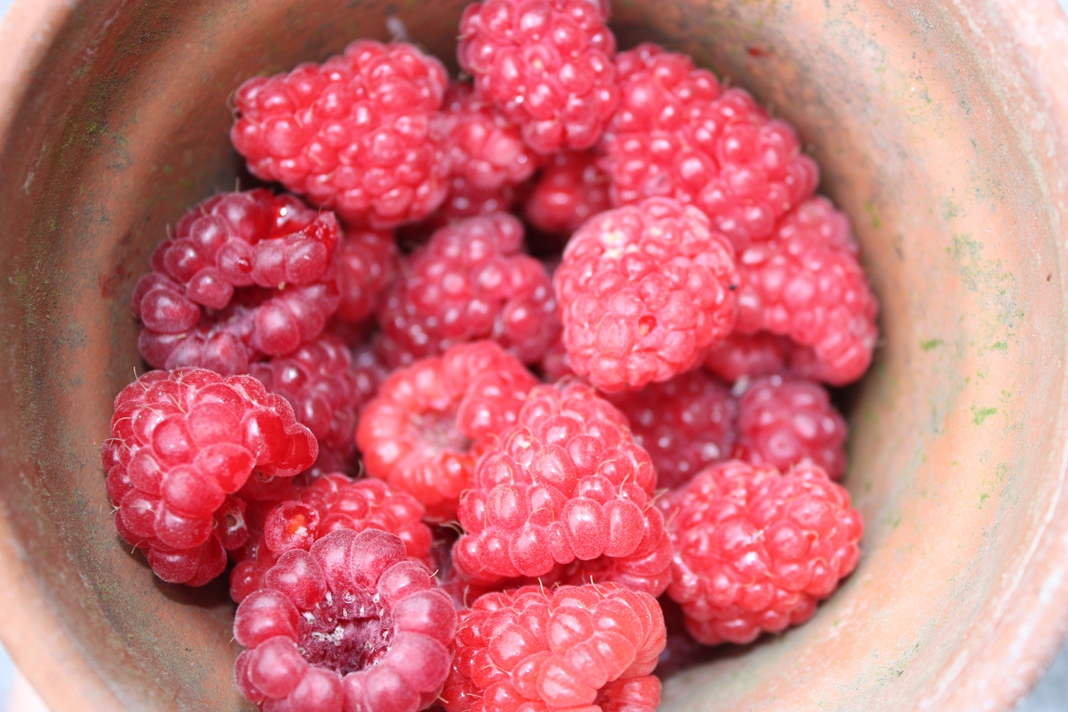
Curiously our home in the country is lovingly  known as ‘Blackberry Farm’, but I challenge anyone to find a blackberry on the land. We have wild, wild hedgerows laden with sloes, elder and a host of unknown berries, we have ancient majestic beech woods with lots of nettles, nut trees and ash, we even have a chalk down – but not a blackberry bush in sight. I know you can plant blackberry canes but somehow that seems wrong when the very mention of the name, ‘blackberry’ conjures up nostalgic childhood memories of foraging around and through hedgerows in search of black, squishy, treasure.  So no blackberry picking for us, at least not at home. The little people have made up for this loss by raspberry raiding instead! Two years ago we planted some raspberry canes, finally they are baring fruit but any chance of them making it to the kitchen is small. Little hands seem to do more thieving and eating than preserving, and the delicate Autumn fruit vanish in a nano second. The same cannot be said of all our produce in the garden. Let me introduce a few ‘problem’ vegetables!

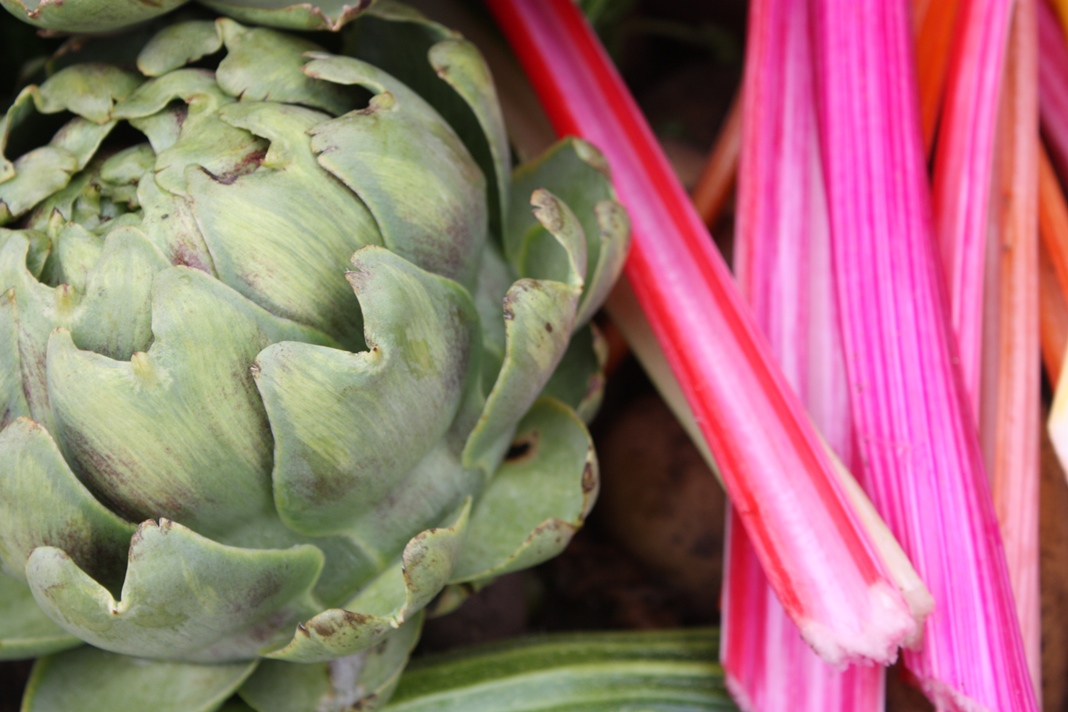
‘Curioser and Curioser’ – that is how I would describe our garden this year. At the moment we seem to be inundated with artichokes, beetroot, potatoes and rainbow chard, and when I say inundated – we really have eaten enough beetroot to turn us all pink. One can always find a home for potatoes and artichokes but as for the chard  – well that is a different story. I am trying to educate my palate to rainbow chard, and trying to like it more. The problem is, there may be a reason why no one else eats it (in the garden that is), as strangely it is completely untouched by the slug and snail brigade, rabbits seems to keep a wide distance, basically it goes under the radar, no one really wants it! However, unlike a lot of other vegetables I planted this year it is one of the few things that has grown absurdly well. It looks stunning, a real splash of color and is great for filling gaps in the kitchen garden, one could almost say it is ornamental. So on that basis I set myself the challenge of trying to like it more, finding a good culinary use for it, as opposed to its existence for purely aesthetic reasons!

The slight issue with rainbow chard is, it is properly psychedelic – bright pink and yellow stalks with vivid green leaves – mood boards around the country shiver at the color combo! So at the risk of creating a really hectic dinner I veered on the cautious side. First off I tried it  sautéed down with some spring onions in a smoked trout and chive tart – that worked, but probably only because the taste was over powered by the fish. Next we ate it  ‘gratin style’, with cream and parmesan, what could go wrong? served with a little pink rack of lamb it was good but a bit too rich for me. Finally, I was left with the pasta option, lightly wilted down chard with  a little garlic, chilli, toasted pine nuts, a few sultanas, a good slug of oil and freshly grated parmesan, it was transformed. It still tasted very healthy, even earthy, but it worked! It was really rather good.

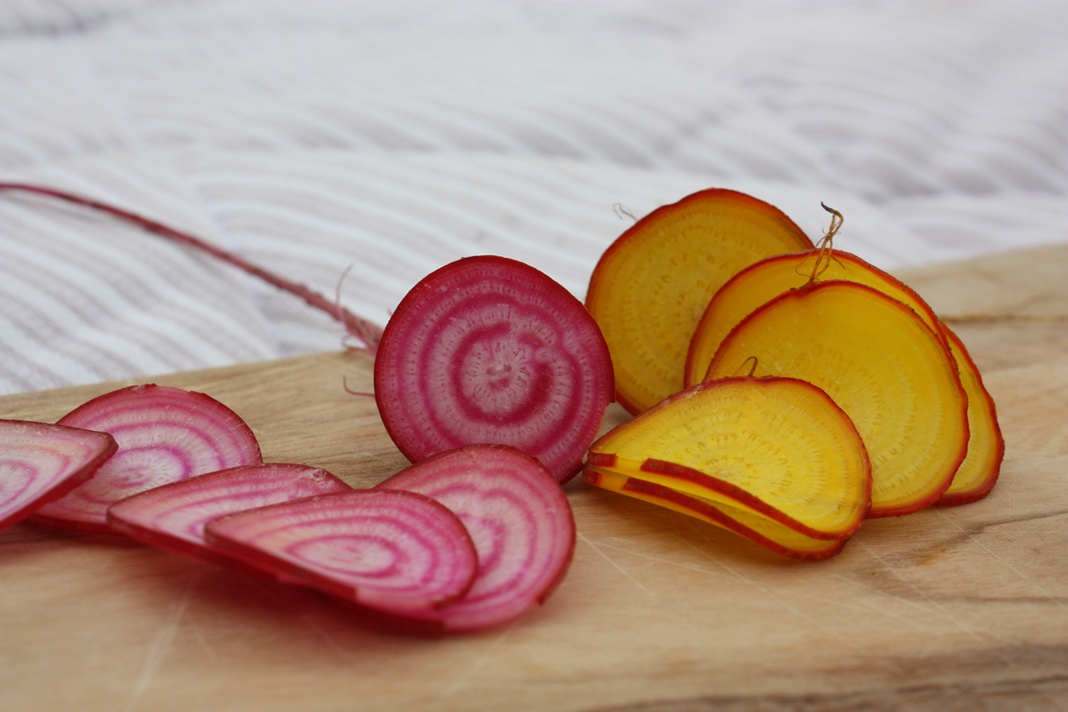
I am not sure I am advocating going out to buy chard – I am not sure I would, but if you have grown it in the garden, this is not a bad home for it, teamed with pasta. But, if you don’t have chard and happen to have a glut of beetroot and tomatoes, do try this instead. You can have it as a stand alone salad as a starter, or as we did, alongside a shoulder of lamb that had been on the bbq, served with sweet chilli and tomato jam and a garden salad. I know I have ranted before about the ‘beetroot and goats cheese’ heavenly combination, so please  forgive me, but coupled with some garden ripe tomatoes and a handful of fresh herbs, here is an easy, seasonal salad that can be created in minutes with virtually no cooking required! The magic with this salad is using different beetroot. For the first year ever golden and choggia (the pink candy striped one) beetroot have outgrown the classic red ‘bolthardy’ variety, I have had so much I have been giving it away, and beware if you come to dinner, you are bound to have this forced upon you!!

Golden, Red and Choggia Beetroot Salad, with garden tomatoes, goats’ cheese and fresh oregano 


Serves 4 as a starter

1 kg  (or just over) of golden, red and choggia beetroot – ideally apple sized!

250 gms of garden tomatoes

100gms  (or more if you are cheese fan) of fresh goats cheese

1 handful of fresh oregano

Olive oil and freshly ground black pepper

A few small uncooked beetroot for shaving over the salad to finish!

1. Cook the beetroot – well here’s the dilemma – roast or boil? Boiling is easy and what is more, the skins slip off instantly. Roast, and the beetroot are sweeter and more intense, but because the skin blisters,  peeling becomes a little ( and only a little ) more time-consuming. Your choice! Roasting does take longer so allow for this, about 1 hour – sometimes more, but obviously this depends on the size of your beetroot. If boiling, it normally takes about 40 minutes, slip a knife into the middle and it should come out easily – but still have a little bite as such! Let the beetroot cool completely before peeling them.

2. Halve and quarter the tomatoes depending on their size. Likewise cut the beetroot into 1 inch cubes. Crumble the goats cheese over the tomatoes and beetroot.

3. Now sprinkle the fresh oregano over the salad along with a good slug of olive oil and a good pinch of Maldon sea salt and grind of black pepper.

4. Lastly if you have a few very small beetroot, leave them raw and slice them extremely finely, ideally on a mandolin over the salad.

Sit back and enjoy – a wonderful, colorful, seasonal and healthy salad.

Posted in Seasonal salads, Vivacious vegetables | Tagged , , , | 6 Comments

A simple starter in September!

A new term, a new nursery and hopefully a host of new friends. Having dropped the ‘blue one’ off, I couldn’t face letting go of the ‘pink one’ – she was less impressed, for no longer is she still a baby . Wow they grow up fast – what on earth am I going to do with the ‘pink one’ in the gaping hole, commonly known as morning? One answer of course is to get cooking. The freezer is completely empty, waiting for the onslaught of the shooting season to fill it with pheasant, partridge, duck and other goodies. Unusually there is no ‘little people’ food in there either, somehow we  have raided every last drawer, so now is the time to try out a few new dishes on the ‘little’ and indeed the ‘big’ people.

‘Miss Brioche’, as she is fondly refered to (the pink one) is as the name hints, the family dustbin. Aged 1 and 3 months she eats everything, rarely does food get turned away in stark contrast to the ‘blue one’ who is more often known as the ‘tiny terror’, fickle is he as to what passes over his lips! Why is it aged 1, children tend to eat pretty much everything that is passed their way and yet just over a year later they sit there and either throw the food on the floor or worse still say something along the lines of ‘deeeesgusting’, ‘I don’t want it’, ‘goooo aaawaaay’.  Charming – small thanks for lovingly cooked, home-made food. Few children have knowingly starved themselves, so I am not averse to the table rule of ‘if you don’t eat your pie’ no pudding, but the frustration involved as a parent as your little darling, who used to inhale his fish pie, nonchalantly turns around and refuses point-blank to eat it, is unparalleled. Last week the pie was fine, actually way more than fine, it was fabulous, he couldn’t get enough of it, this week, forget it. So as fish pie is off the menu, temporarily I may add, I am hunting around for other fish friendly food to tempt the terrors with.

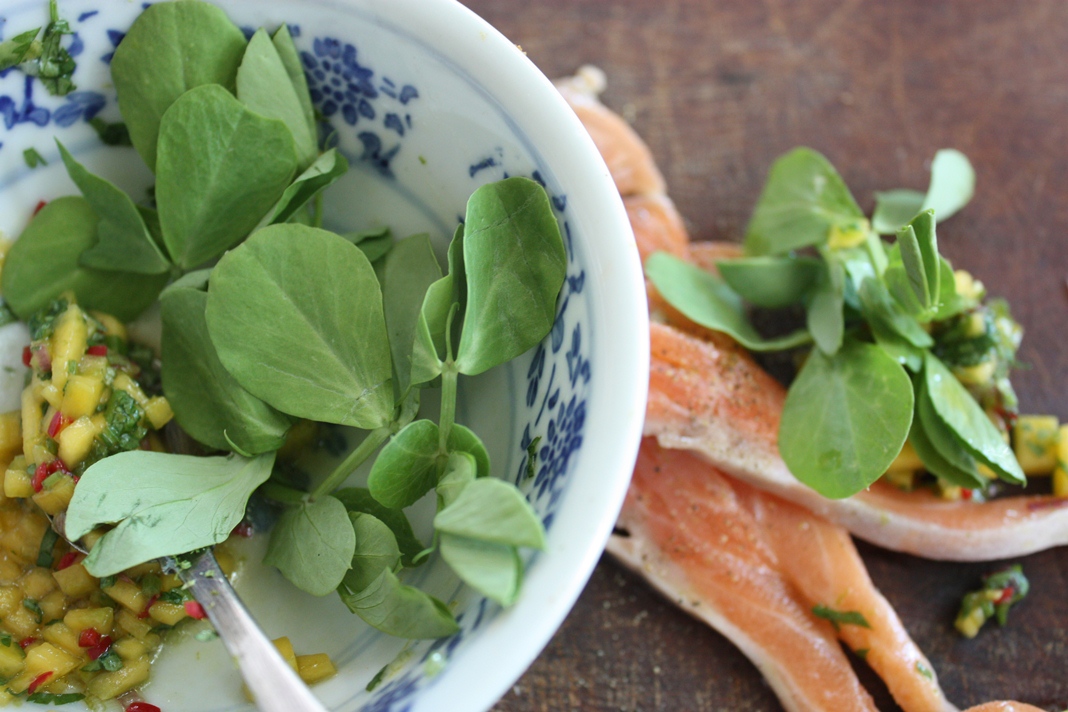
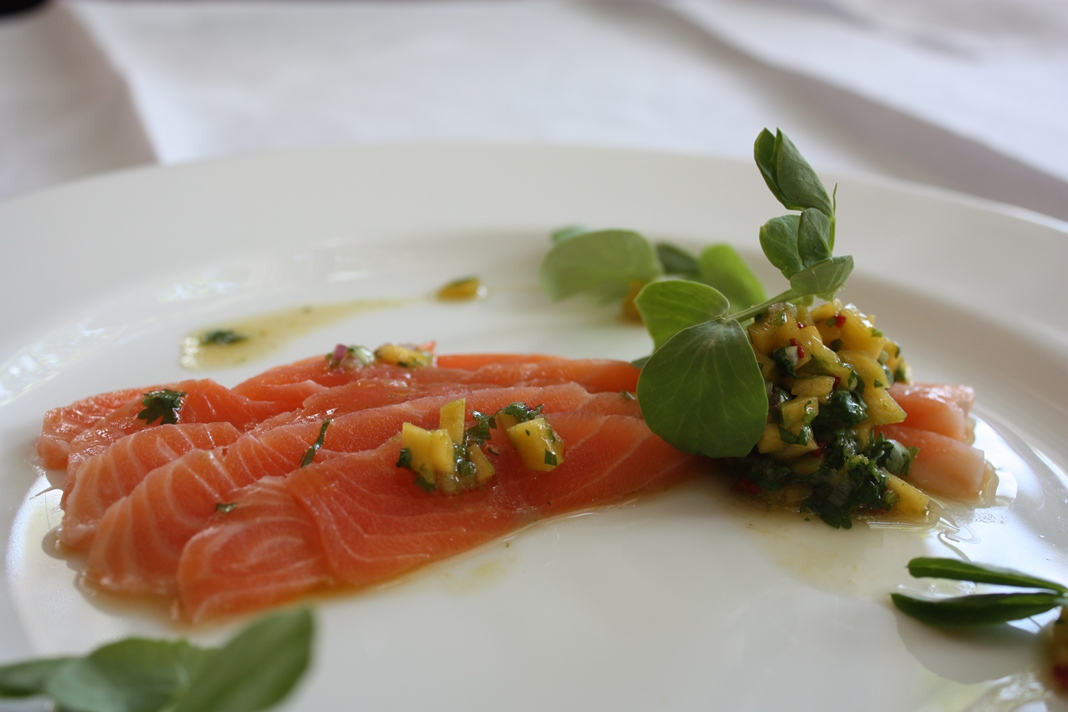
While hunting for fishy dishes, I was reminded of a starter I threw together with one of the big beautiful boys earlier in the summer. He is the very, very, talented chef, so it was a treat to have him in our kitchen helping me knock up dinner. I had bought a piece of salmon and because of the balmy evening had decided on making it into ceviche for a starter with a bastardised ‘Asian’ salsa. I was completely off piste but somehow it worked and since then we have had it a couple of times with rave reviews. It is supremely easy to make, probably a maximum of 15 minutes preparation time, has a real zest, to power up the taste buds, feels healthy and looks super pretty. It is a great light starter dish for a dinner party, particularly if eating a richer meat dish as the main course. Last night we had it followed by grilled grouse with chestnut and chanterelle mushrooms, a complete cracker, and absurdly spoiling – but at £6.50 a bird I could not resist them given that they are retailing in London restaurants in excess of £25.

Salmon Carpaccio with a Lime, Mango and Chilli Salsa

Serves 4

The critical part to this starter is that the salmon is as fresh as possible. Wild, would of course be preferable but organic is the next best thing. The salsa is fairly foolproof and can also work with papaya equally well. The mango or papaya should be very much on the ‘firm’ side of life – this will make it easier to dice into the salsa and will allow it to hold its’ shape. I think a good hot chilli works stunningly – something with a real kick takes this starter to a new level – at least it does if you can handle the heat! As with all my recipes let your taste lead you – taste the dressing once it is made and if it needs a squeeze more lime add it, like wise if it needs a little more honey add it.

2 x Organic salmon fillets each weighing roughly 150/200gms (this will give you 4 very good portions but could stretch to 6, I reckon you need about 70gms per person)

1/2 Mango or Papaya

2 Limes – zested and juice

1 Red chilli

2 tbsp of fresh coriander

3 Spring onions

1 teaspoon of honey

2 tbsp of Olive Oil

1 tbsp of Thai Fish Sauce

1.  GET AHEAD – Start by popping the salmon in the freezer to allow it to harden up before slicing. This will allow you to slice it as thinly as possible. I suggest about 45 minutes – then in order to get ahead so you get the messy bit out of the way early – slice as thinly as conceivably possible and pop on a plate in the fridge covered in cling film until you are ready to use it – this can be done a good few hours in advance. Wash your hands in COLD water to get rid of the fish oils and fishy smell.

2. Next dice the mango – really small – this will require another sharp knife and some accuracy! Followed by the chilli – remember to wash your hands afterwards. And now the coriander and spring onions. Put all of this in a bowl.

3. Zest and juice 1 lime, and now add the olive oil, fish sauce and honey to the salsa. Stir through thoroughly and taste – add more lime zest if necessary and juice – if you don’t need it, use the extra lime for decoration.

4. When you are ready to go – place 4-5 slices of salmon on each plate, a spoonful of salsa, a drizzle of the remaining salsa juice over the salmon and a few pea shoots or rocket leaves. A twist of pepper will finish it off and any extra lime can be used as garnish. Serve immediately with sourdough toast.

Miss Brioche and the ‘blue one’ on the first day of nursery!

Posted in Fish fantastic | Tagged , , | 2 Comments

‘One pot wonders’

The concept is superb, a ‘one pot wonder’ that can feed and satisfy a table of friends and family with minimum fuss, limited stress and still taste delicious. Of course it exists and can come in all manner of ways. So in an attempt to embrace the arrival of autumn, I have decided to write a number of posts with the ‘one pot wonder’ dish in mind. The first one I want to introduce you to still sings of summer so no need to huddle around the hearth quite yet. This is a pasta dish which may seem a bit of a ‘cop out’ for some, but believe me, it is certainly worth trying. It is a straightforward carbonara but with the added addition of courgettes and thyme, that transform this rather simple Italian staple into a refreshingly interesting lunch, teamed with  a fresh fig and raddichio salad with toasted hazelnuts it is the perfect combination to advent the arrival of shorter days and seasonal produce.

Mr.P is rather territorial when it comes to Saturday lunch and the cooking of pasta in general. It really is his domain, which though astonishing to some, is incredibly spoiling to the lucky recipients of his hard work. In this dish I have the supreme responsibility of growing the courgettes, which most years is no problem, assuming you can be patient and not plant the seedlings out too early and hang on in there to beyond the last frost, in theory they just get on with it and grow, and grow they usually do, doubling, tripling in size and producing what seems like an endless supply of tender courgettes with their wickedly bright yellow flowers. This year has been strange and we have not had the usual glut that we normally do which is just weird, but I think the kitchen garden had been a bit of a sad story in general.

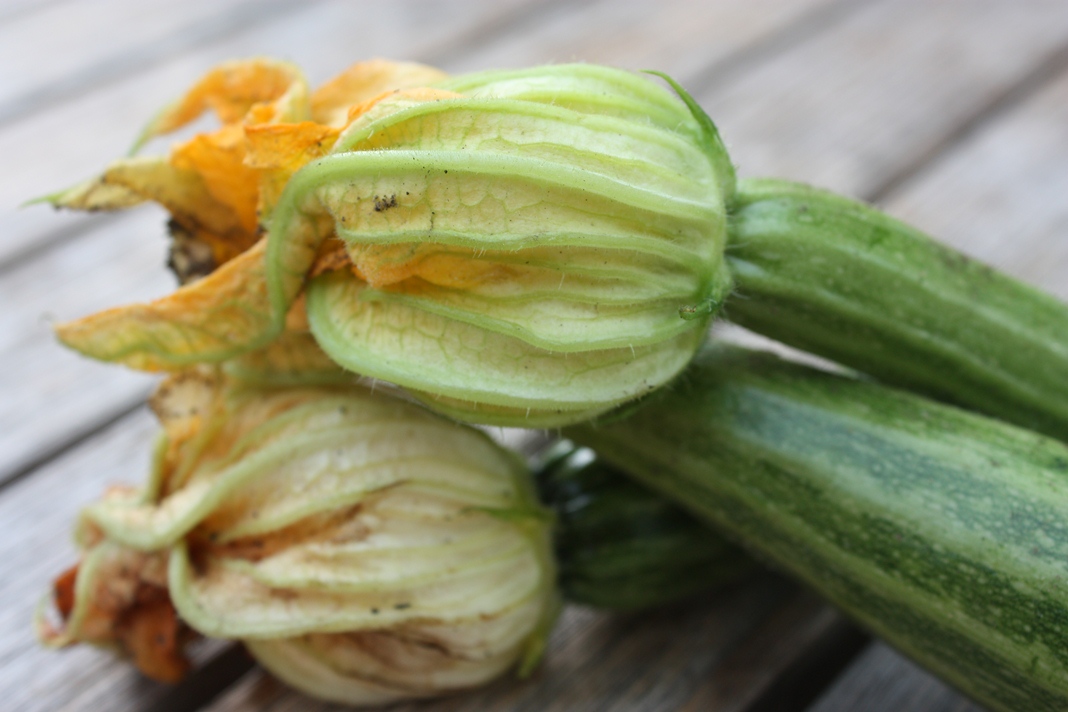
Glut or glutless, if there are no courgettes in your garden, at least they are readily available at any vegetable shop. The real joy of growing your own, is that this recipe has a home for those beautiful, intricate flowers that otherwise end up being stuffed (really has anyone the time) or worse still end upon the compost heap! Back to the kitchen and Mr.P, so I am the courgette grower and thyme picker, Miss.L (the diligent and pretty grown up one) is always primed with grating Parmesan. This has been her responsibility for years and one she takes seriously – woe betide anyone who pinches her job. And job it is, as we get through several tonnes of the stuff every year! Mr.P is good at delegating so everyone gets involved, particularly on a lunch like this, making the whole eating occasion a rather entertaining family affair. We have had this pasta dish twice in the last 2 weeks, firstly in Puglia for 10 hungry mouths and laterly in the Isle of Wight. I can vouch for it very confidently – it is a crowd pleaser every time. After all who can resist carbonara, with the awesome addition of melting courgettes, thyme, lots of freshly ground black pepper and importantly those pretty flowers! It is rich, unctuous, intense, everything your Doctor tells you not to eat, heart attack heaven!

Courgette and Thyme Carbonara

Serves 4

Ingredients

Maldon sea salt and lots of freshly ground black pepper
4 medium green and yellow (if available) courgettes, cut into 1/2 inch batons
400 g penne
4 medium free range egg yolks
100mls of double cream
4 to 5 good handfuls of freshly grated parmesan
10 rashers of smoked streaky bacon
3 tablespoons of fresh thyme
Finely sliced courgette flowers
How To Cook It:
1. Put a large pan of water on to boil with a teaspoon of salt.
2. Cut up the bacon and fry in a little olive oil in a good large non stick frying pan, once the bacon has begun to cook, add the courgette batons, a good long twist of black pepper and fresh thyme. Regularly turn the courgette and bacon mixture so everything takes on gorgeous golden color and the courgettes start to soften and caramelise.
3. When the water is boiling, pour in the penne and stir several times with a wooden spoon, time exactly so the pasta is cooked al dente, drain the pasta, reserving 200ml of pasta cooking water.
4. To make the creamy carbonara sauce, mix the egg yolks, cream and parmesan in a separate bowl.
5. Return the drained pasta to the large frying pan (which has just been taken off the heat) with the bacon and courgettes, add the carbonara sauce and a little of the pasta water, stir to coat all the penne, add a little more pasta water to create a silky smooth sauce. Do not put back on the heat as it will scramble the eggs, if you do, be VERY careful and watch it like a hawk, just occasionally it needs a little more heat and umph.
6. Serve immediately on hot plates with freshly grated parmesan, lots more  ground black pepper, the finely sliced courgette flowers, and some fresh thyme on top.
Serve alongside  a ‘Fresh fig and Radicchio Salad’, scattered with toasted hazelnuts and drizzled with olive oil and white balsamic condiment.
When to eat it, now or anytime of year for that matter. It is quick to prepare and makes a good weekend lunch for friends or a perfect mid-week dinner.
Posted in One Pot Wonders, Vivacious vegetables | Tagged , , | 5 Comments

The perfect excuse for Chocolate Cake.

Birthdays are rather popular in our family, a cause for celebration. Parties for the little people are essential, and for the big people, a cake is a major dietary requirement. I always like the idea of a chocolate cake but sometimes, even laced in icing they can be a little disappointing. Maybe this is because we have been spoilt with chocolate brownies, flourless chocolate cakes and truffle cakes, all of which are intensely rich, gooey and indulgent, in contrast to the somewhat simple ‘sponge’ chocolate cake cousin. Maybe cakes are just  a bit ‘passe’, does anyone really make whole cakes now a days? everyone seems to be into mini-me sizes and heavily iced cupcakes. The answer is I do, and though I am sure cupcakes serve their purpose, there was no way Mr.P was going to be fobbed off on a fairy cake for his birthday!

I am not a brilliant baker, I have had a bit of practice but there is plenty of room for improvement. To be honest, and probably thankfully, my sweet tooth did not really show its true colors until the pink one arrived. Cakes were not a massive part of my cooking repertoire at ‘Spiceland’, so annoyingly I do not have a ‘little black book’ of brilliant cake recipes at hand. No, sadly not, so last weekend I was left with a rather motley 1970s collection of cook books  (that’s a beach house in Bembridge for you) to choose the all important birthday cake from. I failed and succumbed to trusty old google and Nigella! Strange how one defaults to this, what would we do without it I wonder? I cross-referenced a few other recipes, but for ease of making, correct ingredients in the fridge, etc, etc, etc,  ‘The Domestic Goddess’ won hands down.

The cake was very easy to make. I think I overcooked it by a few minutes but if one was not running round the garden pretending to be a dinosaur, you could easily remedy this by simply paying attention! Icing – which frankly makes the cake, was a classic butter icing with a bar of melted dark chocolate added to it and some sour cream. So if you need a quick, foolproof chocolate cake recipe this one is certainly worth a go. It tasted particularly good when the little blue one sang, ‘Happy Birthday not to me’ which was a new one on Daddy!!

Nigella Lawson’s ‘Old Fashioned Chocolate Cake’ as featured in ‘Feast’

Ingredients

For the cake

  • 200 Grams Plain flour
  • 200 Grams Caster sugar
  • 1 Teaspoon Baking powder
  • 1 Teaspoon Bicarbonate of soda
  • 40 Grams Cocoa powder
  • 175 Grams Unsalted butter Soft
  • 2 Large Eggs
  • 2 Teaspoon Vanilla extract
  • 150 Millilitres Sour cream

1. Firstly turn the oven on to 18o.  Line and prepare 2 round 20cm sandwich cake tins. I use the foil wrapper from the butter and then shake flour around the tins.

2. Now the easy bit, put all the above, measured ingredients into a magi-mix and blitz till all incorporated. Pour/ spoon equally into the 2 tins and pop in the oven for about 25 minutes, it may need longer, depending on your oven. The cakes should have pulled away very slightly from the tin, and spring back when touched in the middle. If you insert a knife in the middle it should come out completely clean.

3. Turn out the cakes on to wire racks and cool before icing.

4. Icing – very important! I freestyle icing and on this occasion used butter, icing sugar, 100gms dark melted chocolate, sour cream. Lashings of icing in the middle to sandwich the cake and lashings on top. Candles, smarties, music, action…….’Happy Birthday to you’

Posted in Delectable delights, Picnic party | Tagged | 2 Comments

Figue 3 – memories of Puglia!

Before my tan fades completely, please excuse my last rant on holiday eating! I was prompted some time ago to write about figs by a dear old safari days friend who lives in Lusaka, he has one overly enthusiastic fig tree and few ideas as to what to do with the produce, so as promised back in July here is 5 minutes on figs.
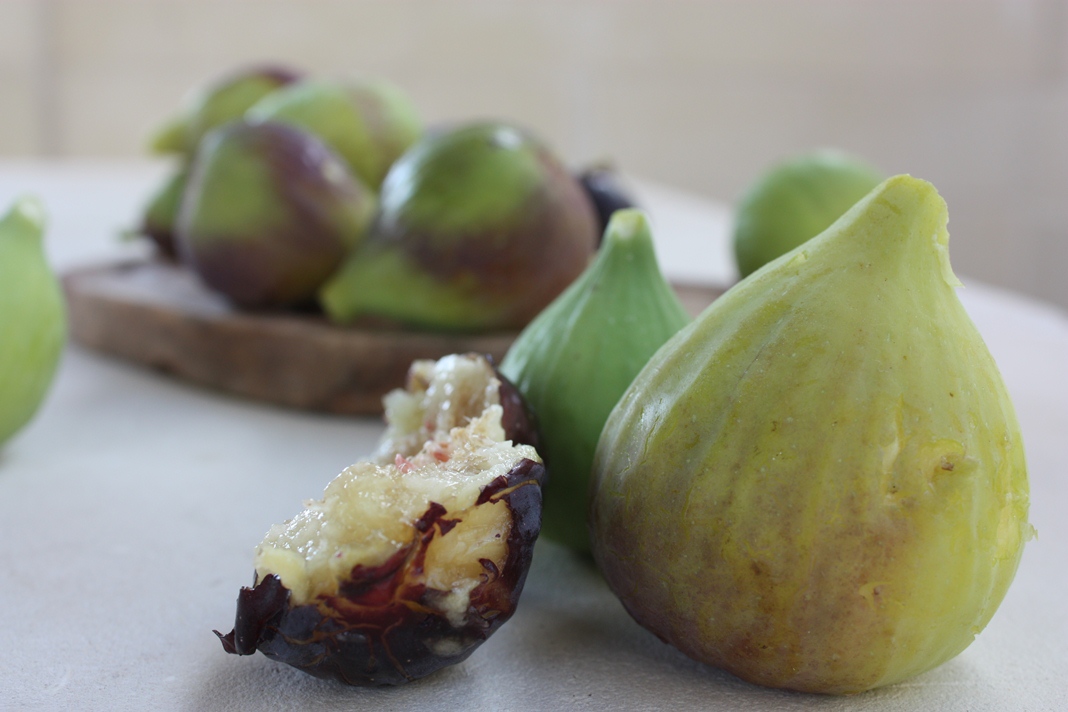
I can’t help thinking that the fig really should have been the ‘forbidden’ one. A little controversial I agree, but come purple or green they have to be the most tempestuous of fruits. Alas, the apple was chosen, and it was left to the leaves of the fig to clad the nether regions of nude figures in paintings and sculpture for evermore! But figs are tempting and I was reminded of this all too quickly when shuffling through a pile of holiday snaps I came across the photo above and simply couldn’t believe how utterly edible, ripe and oozingly sensual these figs appear. I know they were of course, I ate enough to be able to qualify that, at 2.50 Euros a kilo it was shameful not to. Ripened in their own time under the Puglian sun, it was like eating honey, liquid gold, nectar, everything the ‘forbidden fruit’ should have been both inside and out, and more.

I don’t know a huge amount about figs and fig cultivation. I know we have a fig tree which sadly produces about 1 inedible, shriveled specimen every other year, so my guess is, though I admit through no real due diligence, is that ‘Blighty’, tragically is just not suited to fig growing. I’ll put it down to climate – it’s blindingly obvious isn’t it? The upside is of course, figs to me are a luxury while travelling abroad, and as the price indicates – they really are ‘2 a penny’, so much so that we strangely struggled to find places that sold them. The local supermarket sporadically had punnets of small, bulging, green ones, one day the covered ‘mercato’ in Maglie has a withered gentleman selling a mix of purple and green ones, probably from his back garden, but that aside they were not that easy to come by, and the reason for this is (at least my belief is) the local Puglian population is ‘figged’ out, hence it was left to the scooter collecting team to go marauding around the grounds of the Masseria we had rented in search of the not so ‘forbidden’ fruit.

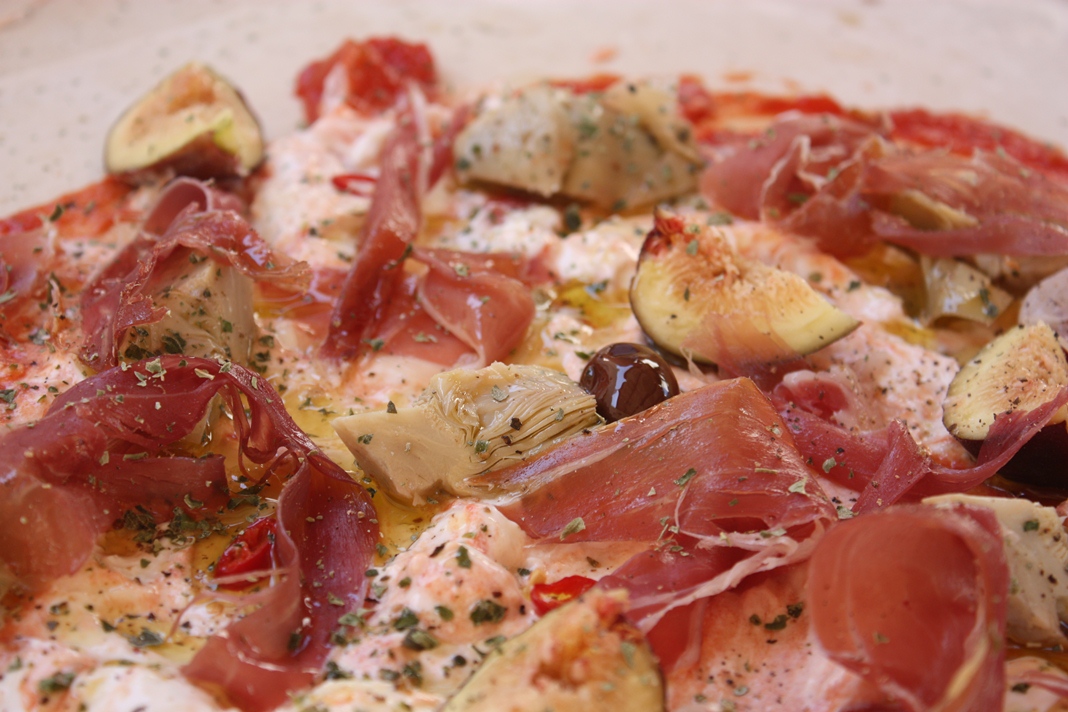
Thankfully we were not, (‘figged out’ that is) and consequently consumed vast quantities. The versatile little gems lent themselves to all sorts of dishes on our Puglian adventure; they had a unique ongoing affair with prosciutto, salami and bresaola, they married well with gorgonzola and docelatte, they were surprisingly popular on top of pizza, pitched perfectly in salads, and were a heavenly pick me up in the morning broken over natural yoghurt with a drizzle of honey and some toasted nuts. They were seriously good and I mourn my loss, as try as they might, the figs that I buy here simply don’t taste the same. That said I am not so proud that I will deny myself them until next summer and a return trip to Italy. No way, I will endeavour to hunt some down, after all Turkey produces vast quantities of the purple fig that is about to hit our shelves any minute now. These will never replicate the shockingly ripe and sensuous morsels I have been spoilt enough to consume recently but they are still worth eating whether in Lusaka, London or Lambourn.

A few ‘Fig’ solutions:

Breakfast: Figs broken over yoghurt – drizzled with honey and toasted nuts /made into compote / made into smoothies

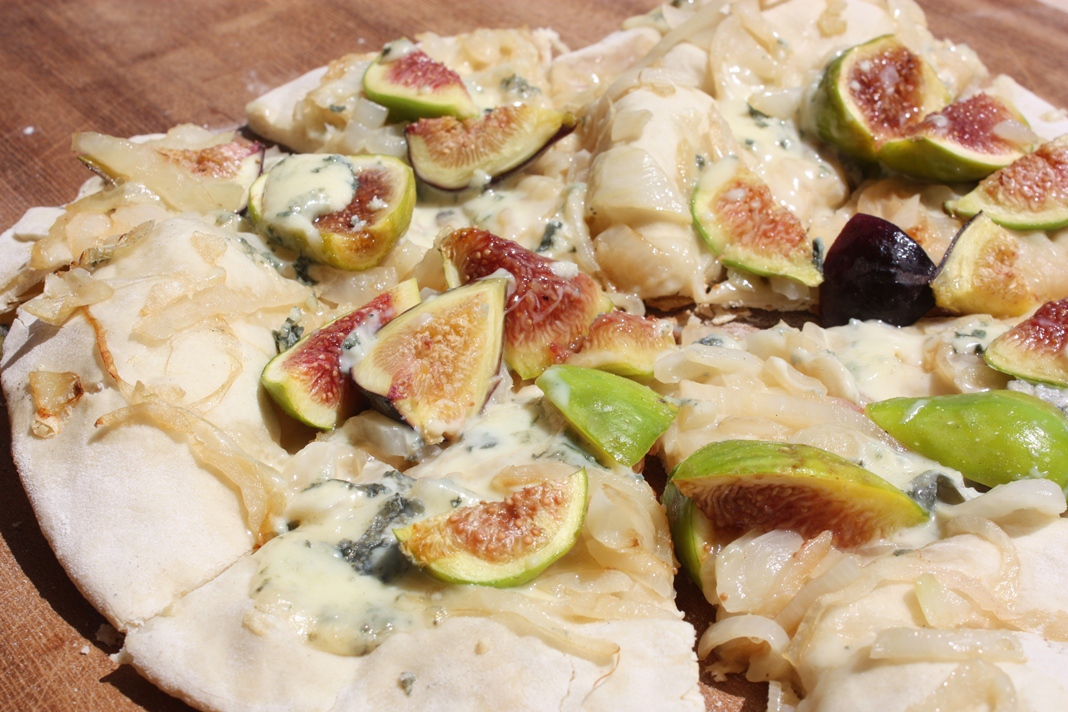
White onion, fresh fig and gorgonzola pizza

Fresh fig, rocket  and prosciutto salad with toasted hazelnuts

Radicchio, rocket, fresh fig salad with toasted ground walnuts and shavings of Pecorino

Fig, Parma ham and quince skewers

Fig jam – the obvious accompaniment for Fois Gras but can also be good with a rich chicken liver pate

Rolled leg of lamb stuffed with fresh figs, pine nuts and goats cheese

Couscous, with figs (quartered), crumbled goats’ cheese, fresh parsley, pistachios and lemon dressing

Tagliatelle with fresh figs, blue cheese, mascarpone and walnuts

Baked figs with maple syrup served with pannacotta or vanilla ice cream or mascarpone

Glazed fig tart

Or, quite simply eaten as an adulterated fig!

Types of figs we have been eating: Kadota Figs and Black Mission Figs

Posted in Delectable delights, Seasonal salads | Tagged , , , | 3 Comments

More notes from Puglia – Ricci, Spada, Seppia and Gamberi Rossi

  Relief all round, especially for Mr.P – the famous ‘ricci’ have been sourced and devoured. 100 to be precise – I think I ate about 50 of them! As you can see they are prickly little morsels, but morsels they are and delectable too. We are not authentic ‘Ricci di mare’ eaters as we did not actually collect our own – this being part of the whole very delicate process – we left that to the professionals with their cunningly designed scissors that snip ‘oh so delicately’ these fragile urchins off the rocks. This is rather key as the edible part rests completely on one side so you don’t want to get the wrong end. That part being what I have always been led to believe is the ‘roe’ but actually on further investigation is in fact the organ that produces the eggs rather than the eggs themselves, rather unfortunately referred to as the ‘gonads’. Gonads, roe, eggs, whatever one chooses to call them they are quite unique and probably along with oysters, caviar and botarga have a peculiarly unique taste and texture. I adore them, I do know somewhere I can eat them in London but it is just not the same. I want the plastic beach side chairs and tables, salty hair, sun-baked skin and a pile of urchins, looking out over the Adriatic, not counting every pound I have spent on them but instead relishing that they are such a bargain at 20 Euros for a 100! or thereabouts!!!

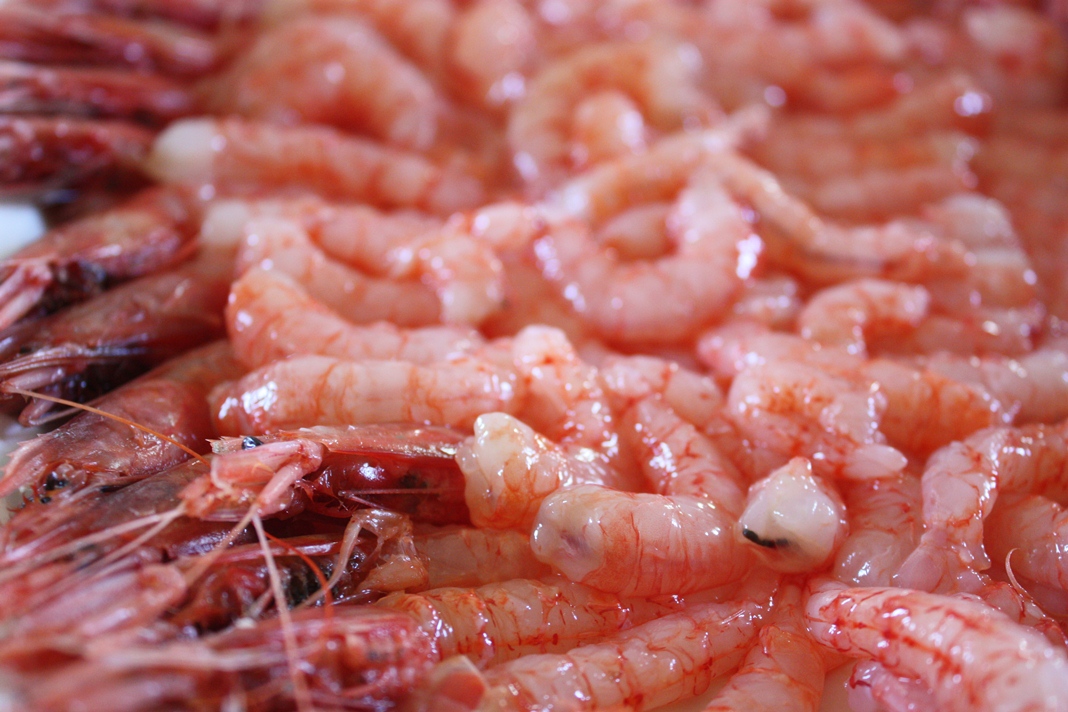
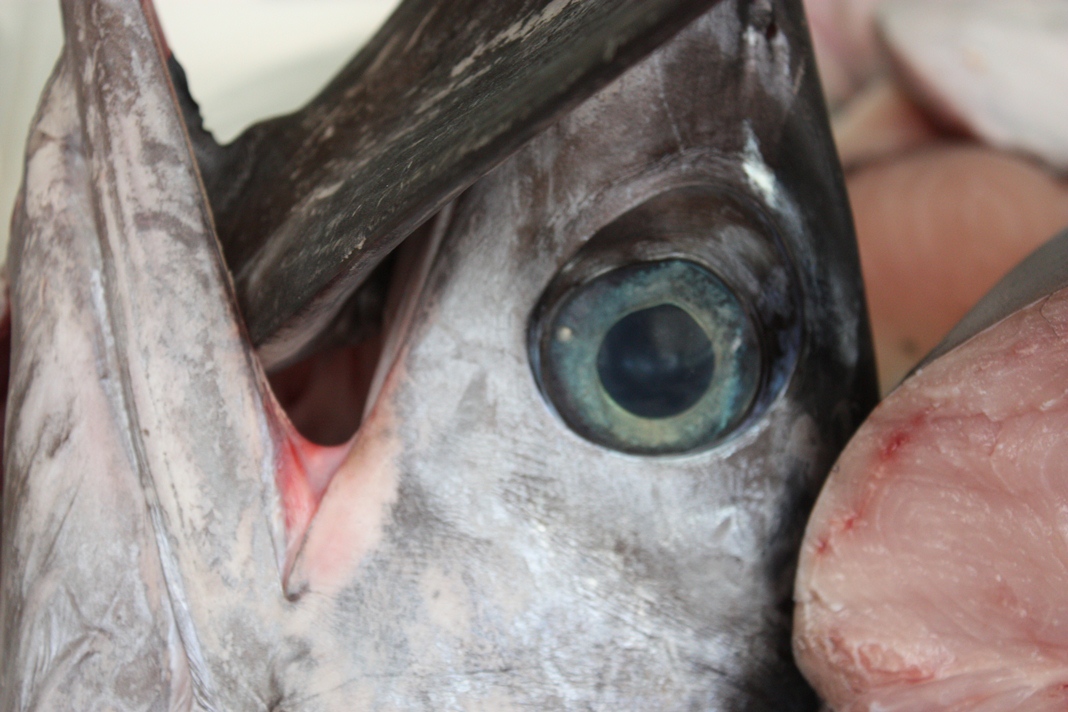
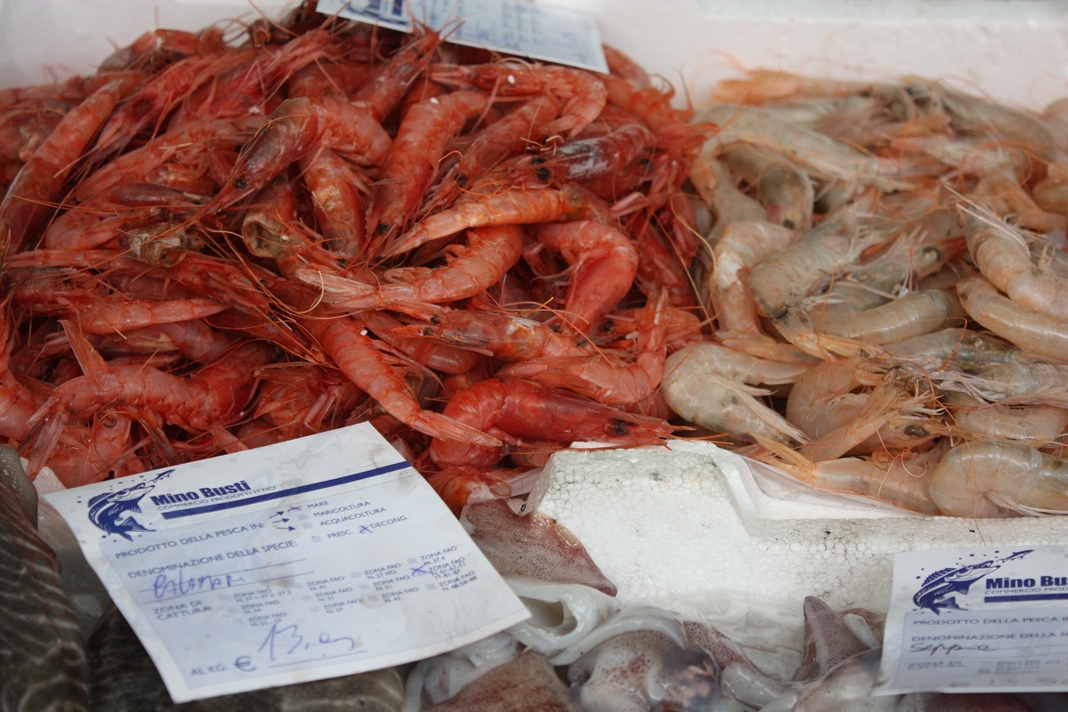
This heavenly 2 week holiday has been a feast of seafood. To be honest meat has barely been a feature which is hardly surprising given the scope and variety of fish and shellfish available. Raw fish is very popular in the form of tartare and carpaccio and we have had more than our share of gamberi rossi, sweet red prawns, which we serve raw literally with a splash of olive oil and freshly squeezed lemon. ‘Spada’ (swordfish) has been simply cooked on the bbq, ‘Seppia’ (cuttlefish) has had similar treatment, squid in every different shape and size has been eaten in rissotto, pasta and on skewers. ‘Tonno’ has been bought whole and minutely gutted and filleted, marinated and served lightly seared, on top of slow, sweet baked peppers. It has been a seafood bonanza.

We have eaten unknown fishes none of us have ever heard of, plenty of ‘vongole'(clams), ‘cozze’ (mussels) but no crab! One can only assume it is either out of season or just these warm reaches of the mediterranean are not chilled enough. We have endless sessions in the kitchen with eager eyes watching ‘polpo’ being cleaned and cut up, 2 year olds and 20 year olds seem to be equally fascinated. We have even had a swordfish beak, a superb sword of maybe 80cm, kindly given to us by the fish monger drying on the roof that has on subsequent investigation been snatched by a creature of the night. It has been seriously indulgent, a complete luxury, and astonishingly reasonable.

This is a rugged part of Italy and though popular with the Italian tourists who plaster the local beaches like seals we have as yet still not heard another English voice. It is clearly not the Amalfi coast, Sardinia or Porto Ercole but it does have a unique charm that is quite enchanting. Obviously the food is a magnet for our family but beyond hunting for local specialities and markets, the local towns are steeped in history and culture, ancient olive groves seem to stretch to infinity and the sun importantly shines almost every day (annoyingly just not on my birthday).

Food Notes:

SKILE – località Porto Badisco – 0836 811631 – is the ‘Ricci’ restaurant we have been frequenting – phone ahead to order the said ‘Ricci’ to avoid disappointment.

Martano – our closest town has a tiny, but wonderful fresh pasta shop called ‘Bonta Salentine’,  Via Soleto, T 338 309 1970 and an extremely good wine shop ‘Divino’ with a superb selection of Italian wine, not solely Puglian.

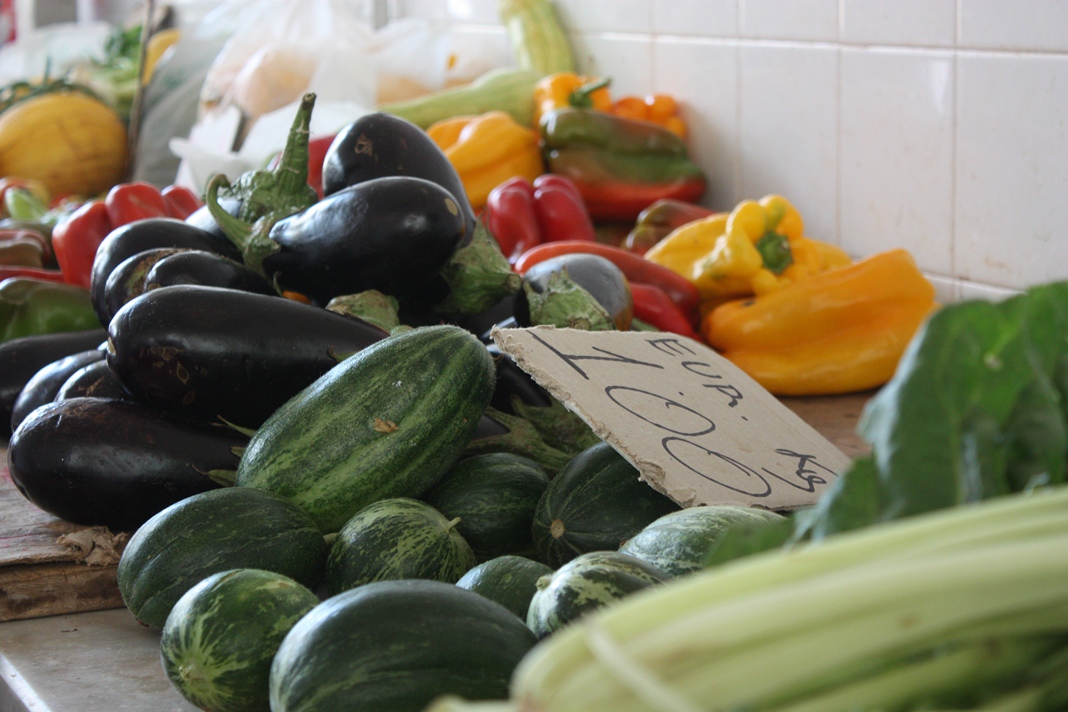
Maglie – has a lovely covered market with about 6 different fishmongers and the same again fruit and vegetable stores. Just outside the covered market is a super fresh mozarella and burrata shop which also sells delicious bread.

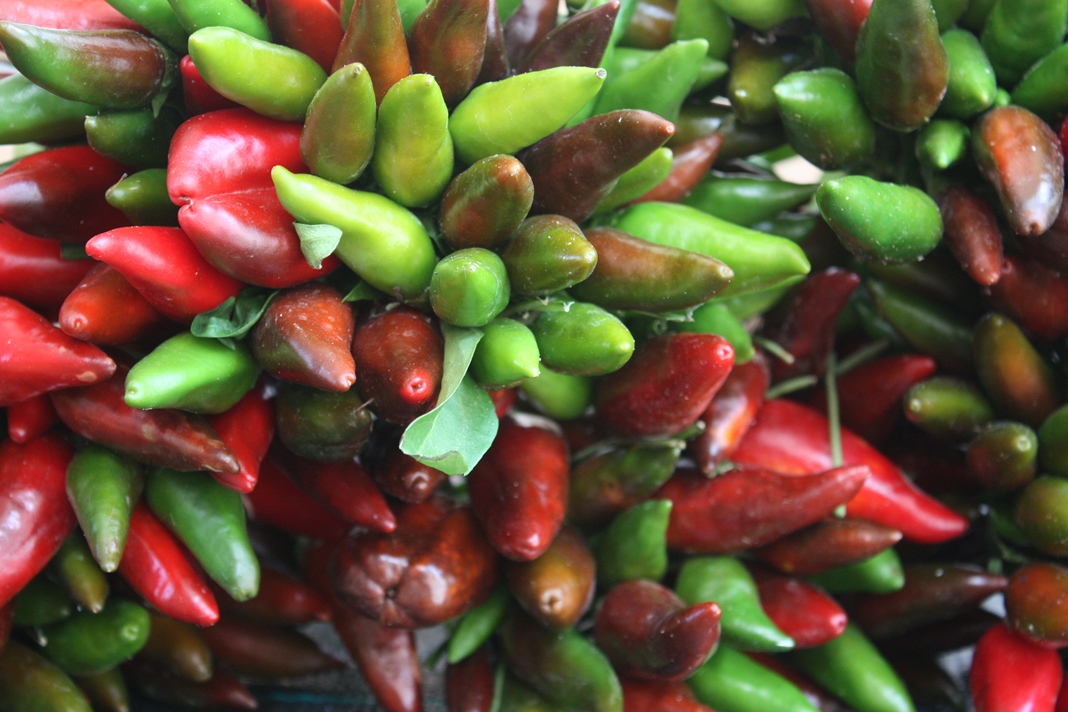
Roadside stores seem to sells the best melons, figs, tomatoes, along with super salty capers, sundried tomatoes and and chillies.

Posted in Fish fantastic, Little black foodie book | Tagged , | Leave a comment

Notes from Puglia and a quick pizza!

Day 3 and I am getting increasingly concerned that my much-loved ‘Ricci’ are not going to feature on this holiday. Last time I was in Puglia, 5 years ago, I was introduced to this delicacy and have been licking my lips in anticipation ever since we booked the Masseria back in February. ‘Ricci’ are sea urchins, and they are simple divine. This coastline is littered with them, scarily plastering the rocky seascape, prettily but dangerously waving their poisonous needles in the warm currents of the mediterranean. Last time we were here they were a major feature at the comedy plastic chair and table beach side restaurants we frequented, now I’m struggling to find them.

Fish is something Puglia does in a major way, especially where we are on the Salentine Peninsular, far, far, far south! So I’m on my search for sea urchins and Mr.P is on his search for ‘Gamberi Rossi’ (Red Prawns) and so far we have both failed. The shopping team today came back with swordfish and huge cuttle fish, both look fresh as fresh could be, and after a little marinading and bbq action, I’m sure will taste delicious. The fisherman has promised us red prawns tomorrow and the boatman has promised me ricci on saturday.

Day 4 -Relief – ‘gamberi rossi’ have been found and bought- by the kilo I may add. A trip to Maglie came up trumps with the goods but still no sea urchin in sight. The covered market saved the day, with no less than 6 different fish mongers and the same again in vegetable, fruit stores, this provided the perfect shopping fiesta I have been searching for. That and the discovery of the fresh mozzarella shop opposite sealed our fate – my arteries are literally groaning from over indulgence of shellfish and creamy rich, burratta, mozzarella and ricotta.

Day 5 -Pizza -who can resist? especially when the pizza oven is just sitting there begging to be used! An emergency run to the supermarket provided the all important fresh yeast and within no time the dough was rising. Making a pizza is always slightly controversial – especially with 10 hungry mouths with understandably 10 different tastes. Previous experience  has taught us to let the gang build their own – and actually it is pretty revealing what works. Fig and gorgonzola seemed to be pretty popular but honestly anything goes, artichoke, parma ham, salami, chilli, anchovy, caper – but please no pineapple! Strangely the pink one loved it but the blue one rejected. How weird is that – no to pizza but yes to fish pie – 2 year olds cease to amaze me.

The wild card pizza – white onion, fresh fig and gorgonzola – very good with a handful of rocket and drizzle of balsamic.

Pizza Dough Recipe

25gms of fresh yeast (conveniently sold in this size in most supermarkets in Italy)

500gms of 00 Flour

1 teaspoon of salt

2 tablespoons of olive oil

Mash up the yeast with a sprinkle of sugar in warm water along with the olive oil. Add this to the flour and carry on adding water, kneading all the time till the dough comes together and is really pliable.

Knead for about 5-10 minutes and leave in a bowl covered with a tea towel to rise.

The intense ‘Puglian’ heat resulting in our bread rising almost instantly – but normally this would take 2-3 hours.

When the dough has doubled in size, knock it back and roll out into your desired pizza size. This quantity of dough will make 4 good sized pizzas.

Mozzarella and tomato for tinies and toddlers.

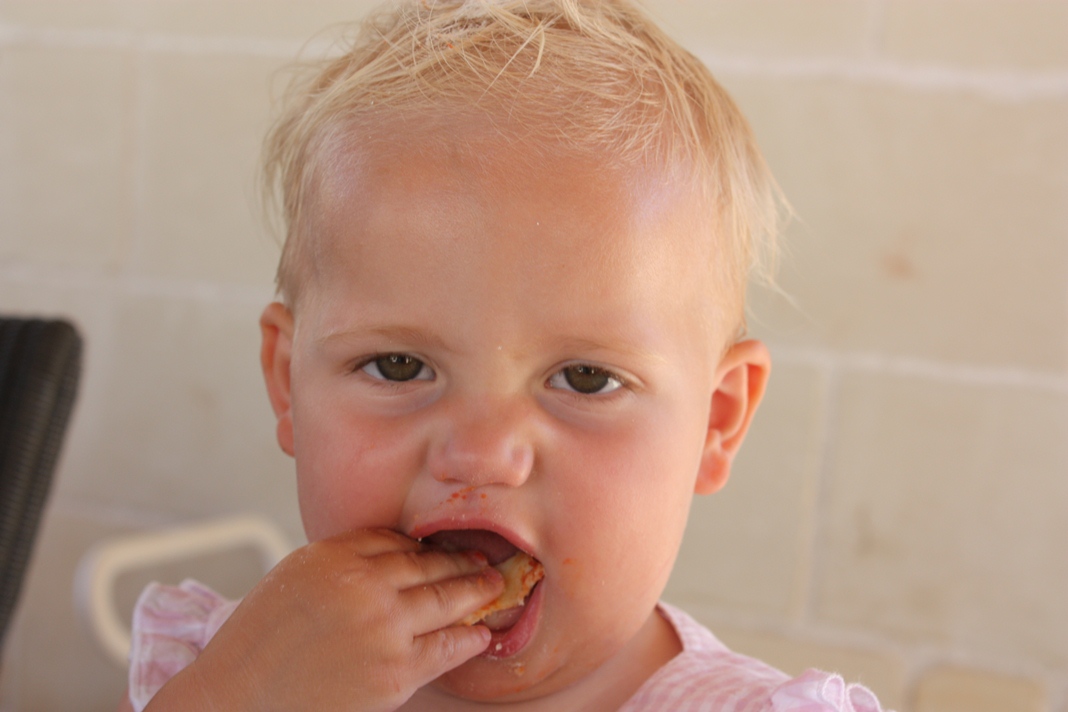
Happiness for the pink lady, as another slab of mozzarella and tomato pizza disappears !

Posted in Delectable delights, Toddlers and tinies | Tagged , , | Leave a comment

Panna cotta – Cooked Italian Cream

Call it what you will, most European countries have some variation of this, be it Creme caramel, Creme Brulee, Crema Catalana, or our own very poor cousin, the Blancmange (sounds convincingly French?). To be fair these all seem to be tinted, hinted or down right burnt with sugar where as the Italian Panna cotta is not. In praise of its’ simplicity in its unadulterated form it literally is cream, milk, sugar, vanilla and gelatine. Brought to simmering point and set, it is in many ways not dissimilar to a wibbly wobbly  cream-milk jelly – sounds shocking but because of its Italian heritage, it works.

Good and bad Panna cotta also exist. I like mine just set – the sole purpose of the sparingly used gelatine being to hold it together not to create a bouncy trampoline you can spring half a dozen raspberries off. So imagine my surprise when raiding the wonderful ‘Olivino’ for Sardinian Red Prawns (that’s another story), when I spotted the most delightful looking single portion jelly moulds on the counter containing Panna cotta – just the way I like it. Geniously sold with some sweet raspberry coulis the ‘one portion wonder’ is a complete marvel and the most gorgeous treat for a home alone dinner. This however is not a practical way to cater for 10 people, well, actually it is extremely practical – just not economical ! Hence I started rooting around my pile of cookbooks to find a tried and tested recipe that I would have used in Sugar & Spice days.

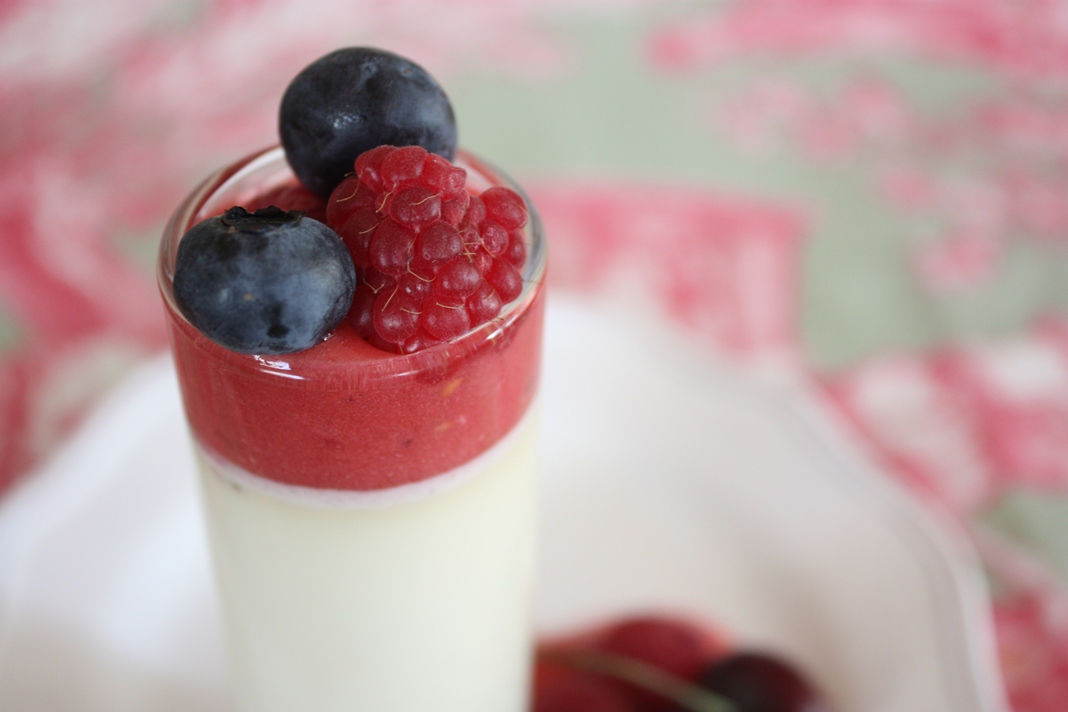
Ballymaloe Bible sprung to mind, as did Leiths, The River Cafe and The Silver Spoon. All recipes vary somewhat – some exclude milk, some use gelatine granules, others use sheet gelatine. I ended up going with The Silver Spoon, mainly because it used gelatine sheets and I happened to have them in my larder, but in my opinion they use too many and I would guess that you could get away with using half what the recipe recommends, actually I’m not guessing – you absolutely certainly can get away with using half. The beauty of Panna cotta for  a dinner party outing is that it can be prepared in advance and teamed with any number of seasonal fruit and berry combinations to suit the time of year. Summer berries are a no brainer now but blood oranges are divine in the early months, a little poached rhubarb is heaven and some sloe gin soaked damsons seriously naughty when autumn approaches. Traditionally it is served in a mould and then turned out but in the calamity of my kitchen we seemed to be ‘mouldless’ so I settled on shot glasses instead – somewhat unconventional but very pretty.

‘The Silver Spoon’ – Panna cotta – with a little less gelatine!

5g of sheet gelatine

100ml of full fat milk

500ml of double cream

100g of caster sugar

1 vanilla pod with seeds scraped into the cream

Fill a small bowl with cold water and soak the gelatine leaves to soften.

Pour the milk into a saucepan and bring to just below simmering point, then remove the pan.

Drain and squeeze out the gelatine and add it to the milk – stirring all the time so it dissolves.

Now pour the cream into a pan with the scraped out vanilla pod and bring to the boil over a low heat.

Immediately remove from the heat, add the milk and gelatine mixture and remove the vanilla pod. Pour into molds or shot glasses or whatever you choose to serve the Panna cotta in. Chill in the fridge until set.

C’est la vie – if you want a versatile, creamy, easy to prepare dessert for a party of friends this is certainly worth a try. If you can’t face making it yourself – well ‘Olivino’ have answered your prayers and made one for you!! Check out the photos below – the single portions have to be the ‘quaintest’ things ever!

‘Olivino’ – Lower Belgrave St, London.

 http://olivorestaurants.com/cgi-bin/olivo/index.html

Posted in Delectable delights, Little black foodie book | Tagged , , , | Leave a comment